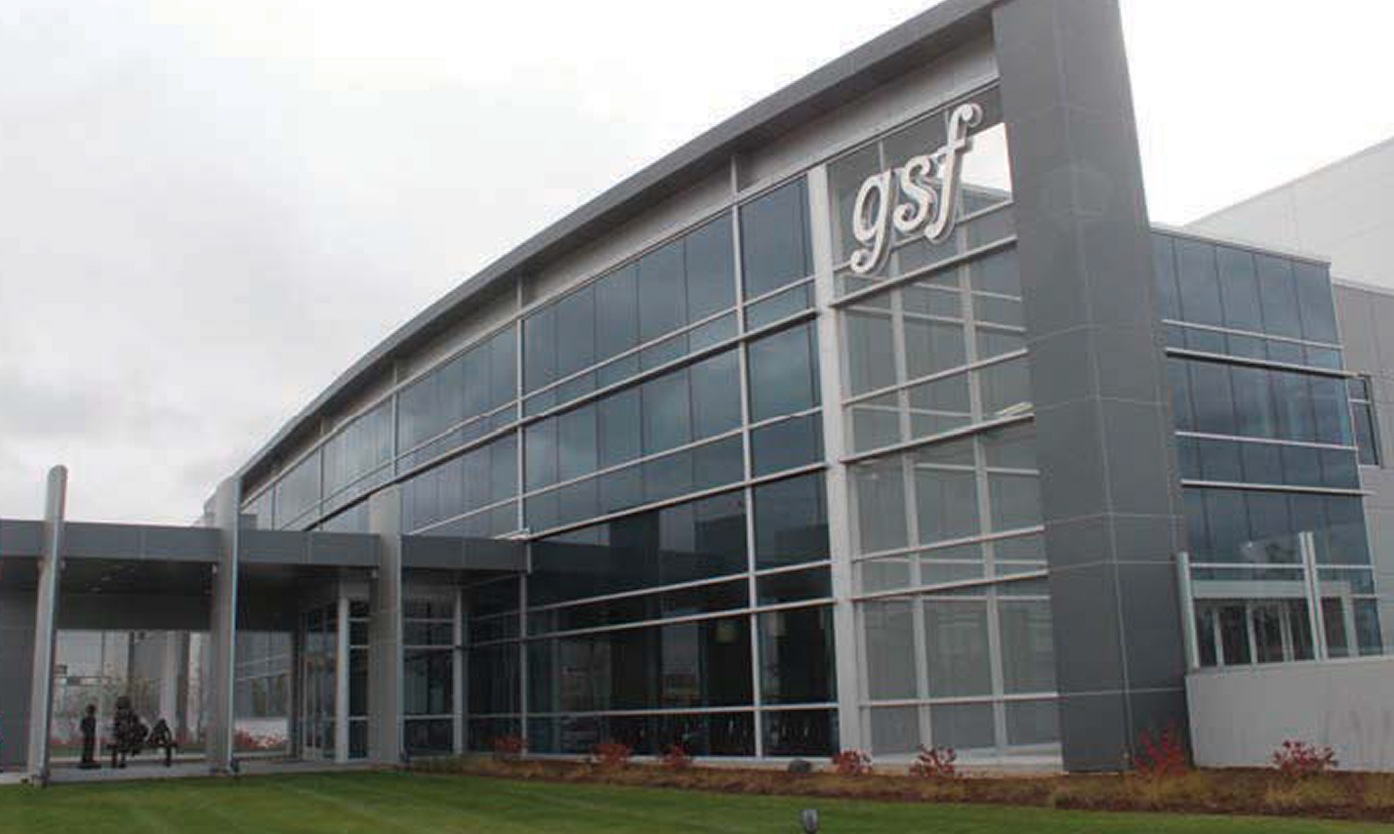
To help make the most of their distribution center (DC), Golden State Foods (GSF) uses reliable Rytec® Doors to ensure that every doorway is ready to handle their high volume, 24/7 traffic.
Chances are when you visit a McDonald’s, Starbucks, or other major chain location, what you’ll find on the menu arrived there with the help of Golden State Foods (GSF), a major link in the supply chain for many nationally and globally known operations. At their newest distribution center in McCook, Illinois, GSF uses Rytec® High Performance Doors to meet the demands of their facility, ensuring that the food meets high quality standards and arrives to customer locations on time.
With annual sales of $6.7 billion, GSF is one of the leading diversified suppliers to the Quick Service Restaurant (QSR) sector, keeping more than 100 customer accounts in over 125,000 restaurants supplied and cooking on three continents. GSF provides these locations with liquid product, meat product, produce, and dairy processing and distribution, along with other services that make it an important partner in the supply chain for these major names in fast food.
GSF’s new 152,670 square-foot regional headquarters and logistics center in McCook is on a 15-acre parcel conveniently located on a transportation corridor in the near west Chicago suburbs. Its 180 associates serve more than 460 McDonald’s restaurants throughout northern Illinois and Indiana.
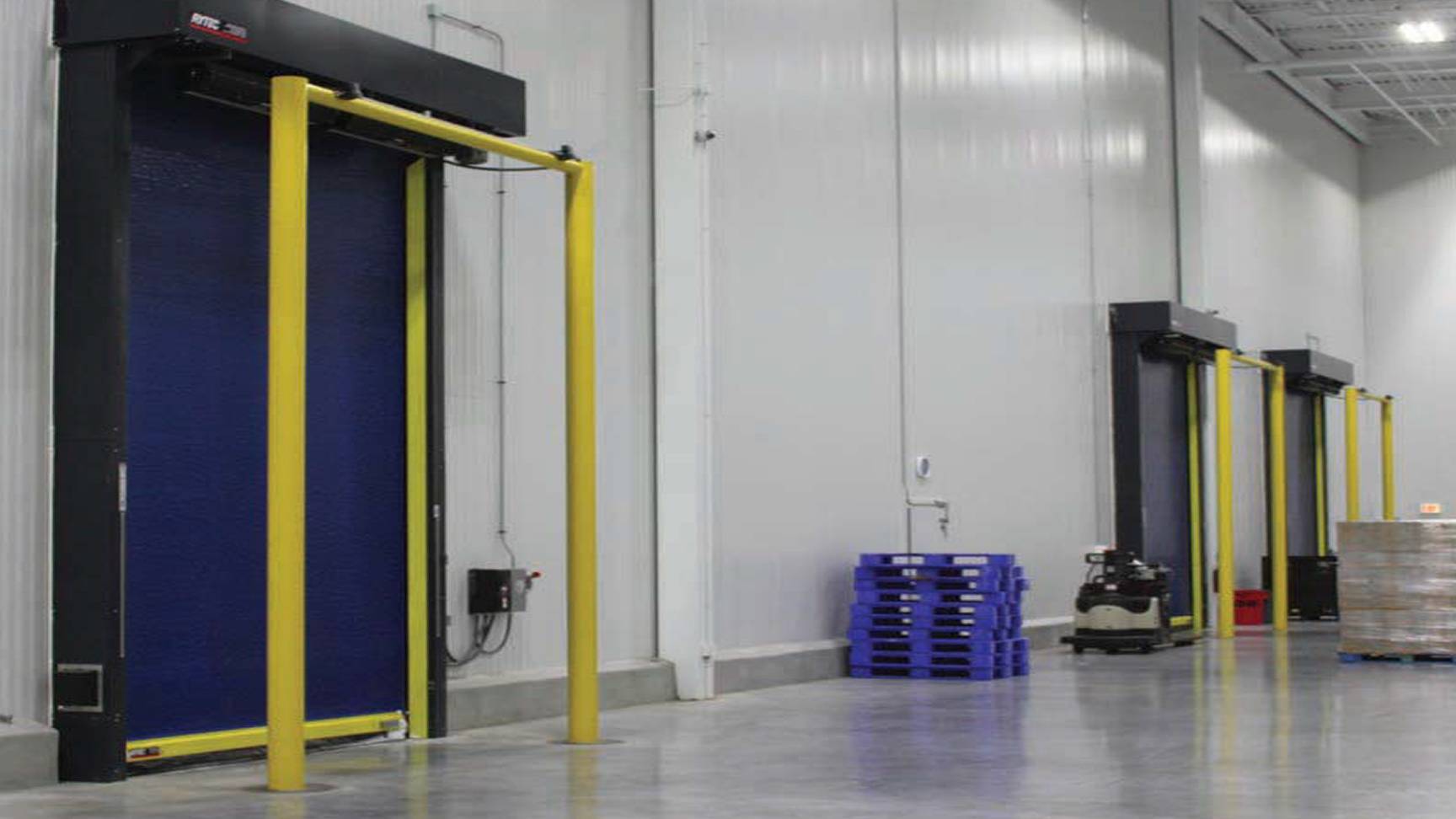
The products GSF Chicago supplies to these locations flows through their freezer storage equipped with six Rytec Turbo-Seal® Insulated doors and are accessed in the fresh food cooler via three Rytec Turbo-Seal SR Self-Repairing doors. The high cycle operation of these doors is crucial to GSF Chicago fulfilling its mission. As Charlie Stone, Director of Distribution Services at the GSF Chicago facility, puts it, “We need a door that’s reliable along with a door company that is reliable, and we have found that to be the case with Rytec.”
More than the typical big box distribution facility, the Chicago building features a stylish, contemporary design and consists of a two-story, 17,550 square-foot office component with a 135,120 square-foot warehouse/distribution space. The company maximizes this building footprint by taking the ceiling height to 40 feet and by setting up a cross-dock, flow-through handling pattern.
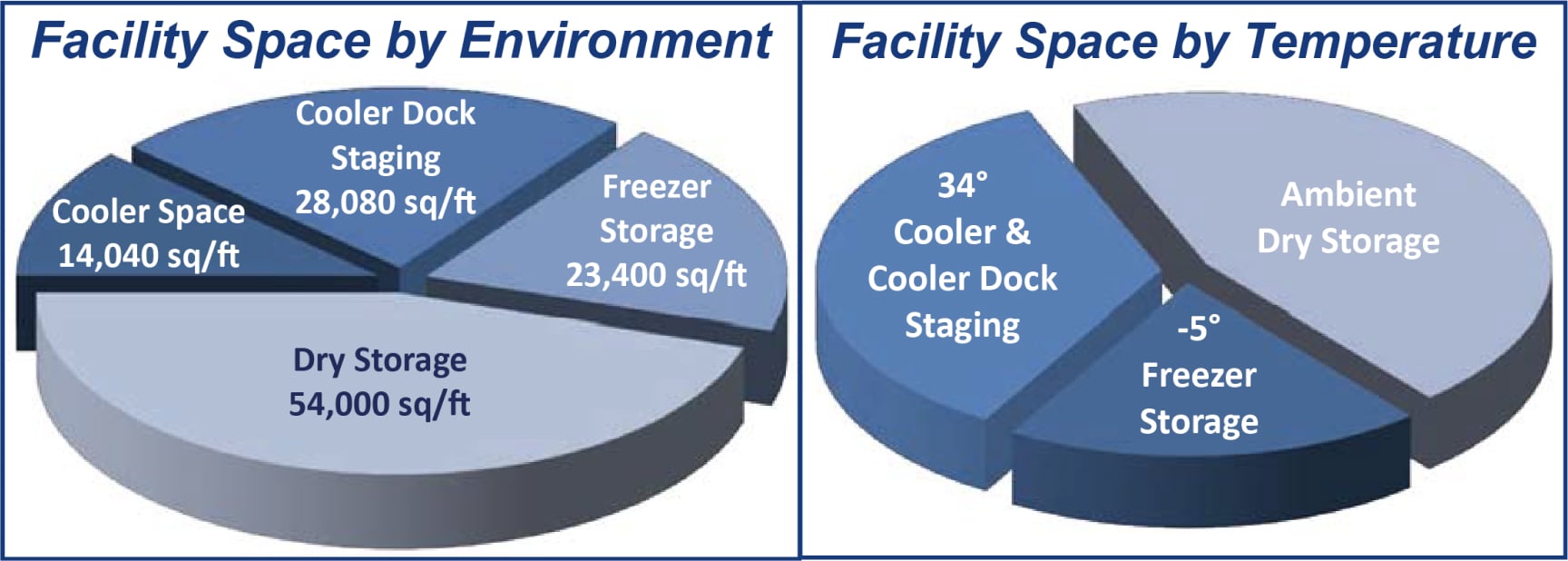
The distribution space breaks out to 54,000 square feet of dry storage. The building’s cascade refrigeration system maintains 14,040 square feet of cooler space at 34°F and 23,400 square feet of freezer storage at -5°F to handle the bulk of the QSR offerings which include meat, fries, produce and, more recently, coffee drinks. This all passes through the building across 28,080 square feet of cooler dock staging at 34°F.
Thanks in part to the 40-ft high ceiling enabling racks five levels high, storage capacity here is triple that of their 40-year old operation at Lemont, IL 15 miles to the west. Masts at 15 feet high on their forklifts reach the highest shelves, and each of the Rytec high-traffic doors have 16-foot tall panels to handle this traffic.
That ceiling height offers GSF Chicago both benefits and challenges. This high-rise storage enabled GSF to layout shorter aisles to make their cross-dock approach even more efficient when it comes to product access. Nevertheless, compacting the footprint means less wall space for cutting doorways into the walls and that is why the facility has just three doors going into and three going out of this high volume freezer.
GSF Chicago has a considerable volume of product to handle and disperse to hundreds of locations, with each of these restaurants each ordering daily nearly 100 inventory items. Take French fries. Fast food operations are heavy users of this side order. The Chicago facility moves three or four trailers of fries every day, with pallets in the freezer going out the door every three to five hours.
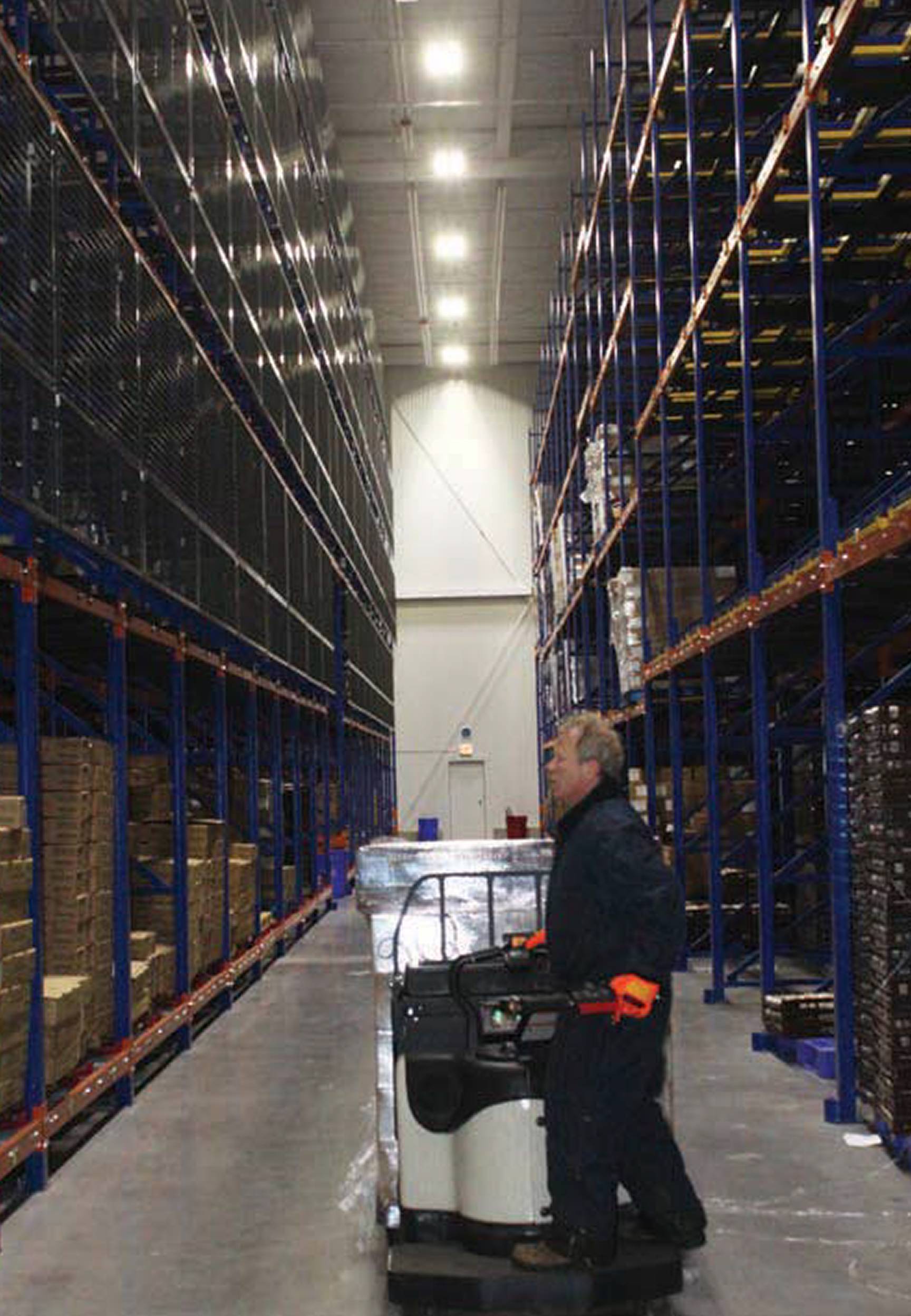
Based on its volume, this 24/7 operation generates 10,000 to 15,000 cycles per month. Inventory for each account cycles every six days. Turns in the cooler happen twice a day and in the freezer, inventory turns every day and a half.
The combination of the compact footprint, high ceilings and high volume enables GSF to get product throughout their service territory on schedule, but here’s the challenge: With traffic streaming in and out of the building through 47 dock doors, losing a single high-traffic door would severely jeopardize these deliveries.
“If the door is down, or won’t come down, that could be detrimental to our operation,” says warehouse manager Jamie Marines. “We cannot afford to lose an opening.”
“If a door ever goes out of operation, we know that we will get rapid response service from Rytec,” adds Stone.
Marines points out that if one door goes down they lose 30% of their shipping capacity. With tight schedules and so many McDonald’s restaurants depending on them, this downtime just can’t be allowed to happen.
“That’s why we like the doors’ durability,” says Marines. “We are hard on things.”
In an operation this busy, door speed is key to product flow and avoiding forklift/door collisions. For both door styles operating at a rapid speed of over 100 inches per second, the 16-foot door panels open fully in less than two seconds. With the high number of cycles in this operation and the 39°F temperature differential between the freezer and docks, the door’s high speed significantly reduces cold air infiltration.
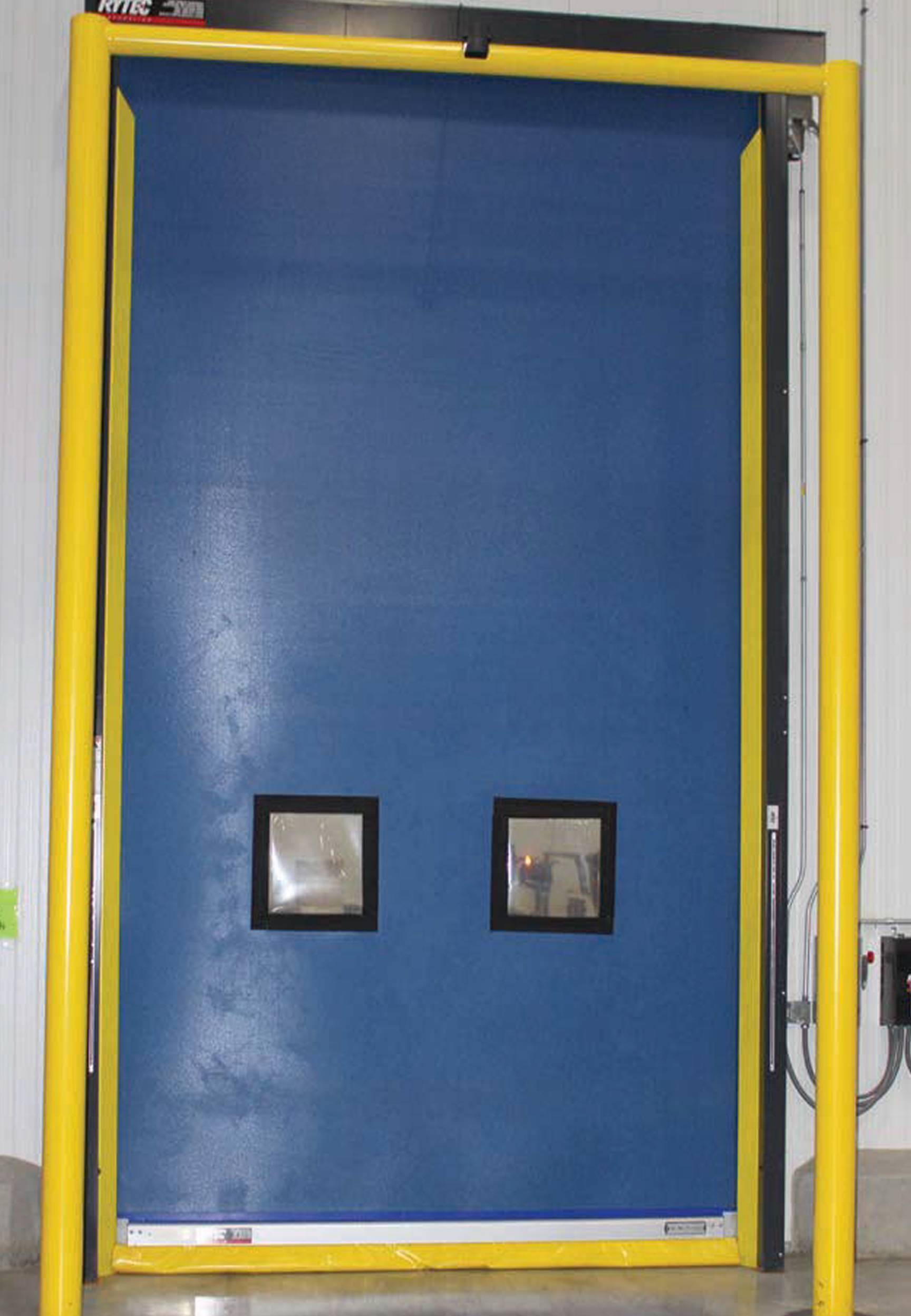
Fast door speed also makes panel collisions with the tall-mast forklifts almost impossible. But if a collision were to occur, the self-repairing system on both door styles automatically resets the panel back into its guide and instantly restores door operation without human intervention.
When it comes to routine door maintenance, the Rytec doors’ advanced design System 4® controller enables adjustments to door operation to be made at floor level, a real benefit when doors are 16 feet tall. The system offers total digital control and self-diagnostics to minimize maintenance surprises. The AC drive enables soft starts and stops, while providing smooth motion at the door’s high speeds for longer component life.
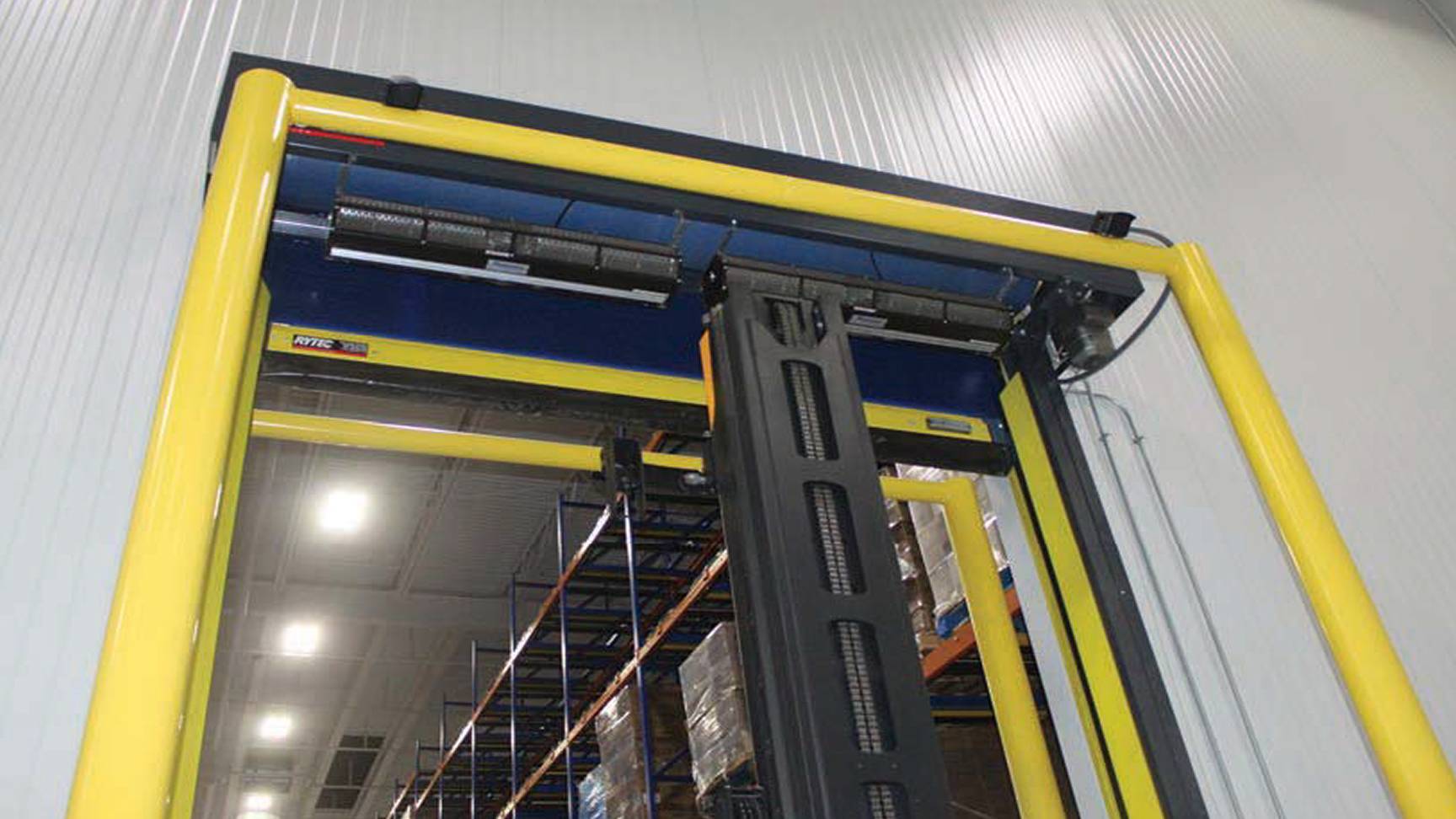
Stone stresses that employee safety is also a major concern at the GSF Chicago operation. To avoid accidental contact with the speeding Rytec door panels, the PathWatch™ LED safety light system (in amber and red) along the door columns warns employees when the door is about to close and when it is actually closing. Two thru-beam photo eyes, a dual pneumatic reversing edge and threshold warning lights protect and alert by reversing the descending door panel if an employee is in the doorway.
The Chicago operation is one of the few LEED Gold certified DCs in the country, and this certification fits with the company’s program to reduce carbon emissions and minimize energy, water consumption and waste. Stone notes that the Chicago location does recycling and composting. In addition, “We reclaim the truck wash water and consequently use 75% less water. We have a 40,000 gallon cistern that catches 50% of the rain water off of our TPO roof, which is used for irrigation on the site.”
The high-performance doors make a big contribution to GSF’s sustainability mission. Marines acknowledges that the Rytec doors help maintain temperatures in the low-temp areas to protect product quality; in doing so, less energy is used overall.
Further, the doors’ high speed and the tight, full perimeter tight seal minimize air infiltration, while the Turbo-Seal Insulated door’s thick panel reduces heat transmission. This combination helps the facility save 40% of energy and reduce operating time on the refrigeration system for longer system life as well.
The doors’ energy efficiencies are produced by some unique product characteristics. The closed-cell Rilon® Thermal II door panel design is laterally rigid to withstand pressure differentials and horizontally flexible to accommodate the door’s high-speed operation. The panel provides a non-porous, moisture-proof barrier for uniform performance.
The panel teams up with the total thermal barriers built into the header, side columns, and bottom bar to minimize conductive thermal energy transference.
Essentially, cold air in the freezer has no way to escape. Quad Seals® in the side columns provide double seals on the front and back of each panel. Double brush seals, combined with the idler barrel, seal at the top of the door. Along the bottom pneumatic chambers compress to hug the floor. These features of the very large Rytec doors enable them to effectively contain the cold air in the low-temp areas.
To GSF, the benefits of the Rytec doors go beyond the doors. According to Stone, “Partnerships are a big part of our success. We feel that Rytec sees it the same way when it comes to relationships, and we like the way they listened to our needs and brainstormed to come up with solutions.”
GSF’s main contact for the project is Rytec’s Chicago-area based regional sales manager John Corcoran. To start off the consideration process he gave the GSF management team a tour of the Rytec Jackson plant, with the group coming away from the visit with an appreciation of potential collaboration along with the quality of the product and the innovative ideas behind it.
“Along with all the other considerations, we are looking for a door company partner that wants to move ahead with new opportunities, and Rytec has proven they can do this based on their product improvements and service level,” according to Stone.
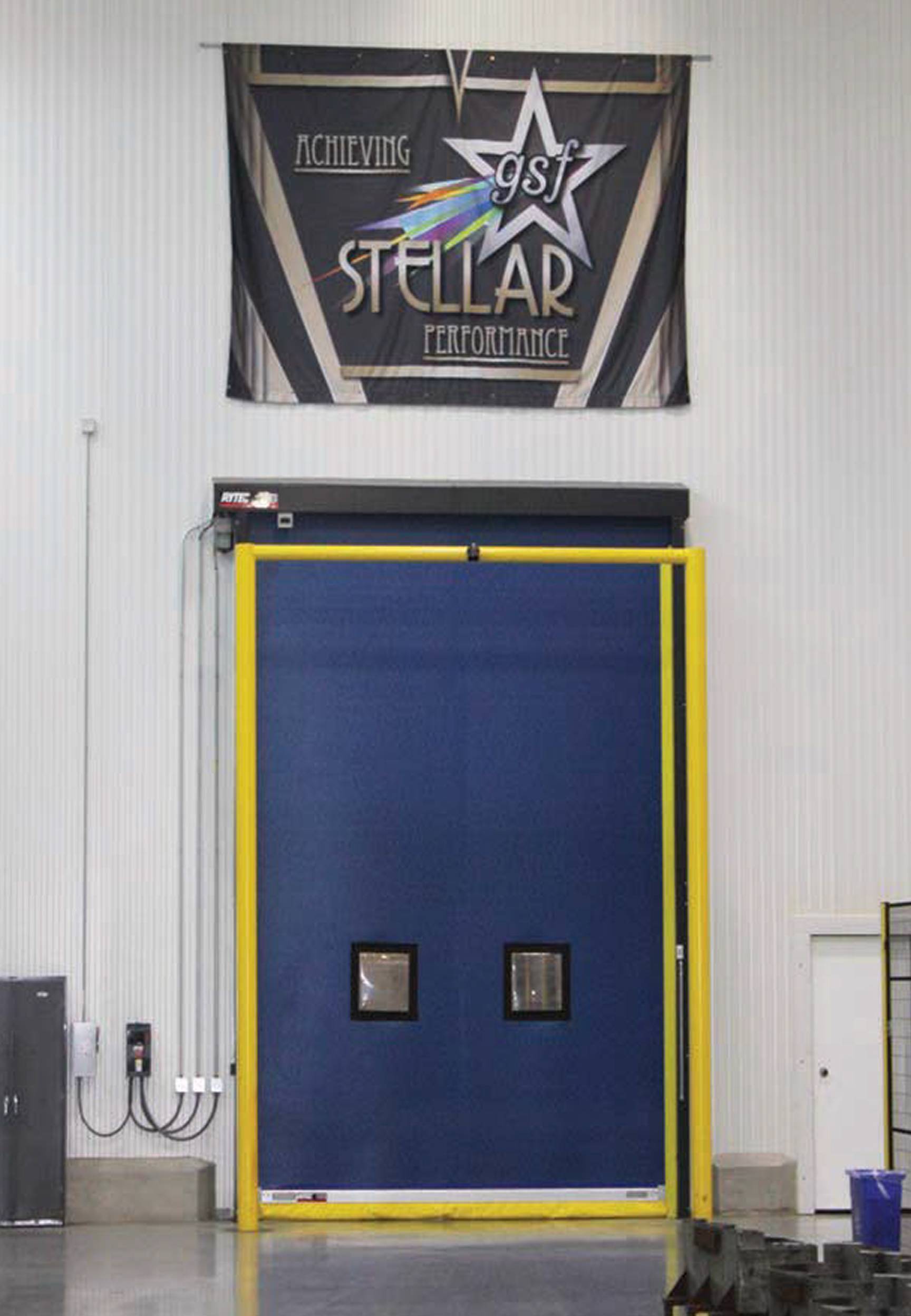
The Rytec Ry-Wi® system is an example of this advanced thinking. This idea eliminates the coil cords usually attached to the bottom bar and communicates continually with the System 4 controller—wherever the controller is mounted—to continually track door operation and provide greater safety.
“When we built this facility,” notes Stone, “GSF was looking for a building that will be useful not just today, not just tomorrow, but 30 to 40 years into the future. The kind of adaptability that Rytec has demonstrated indicates to us that they are capable of growing with us.”