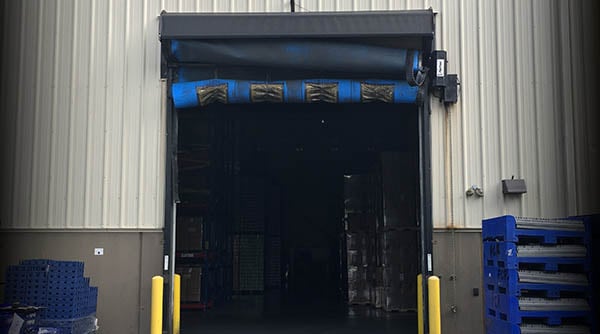
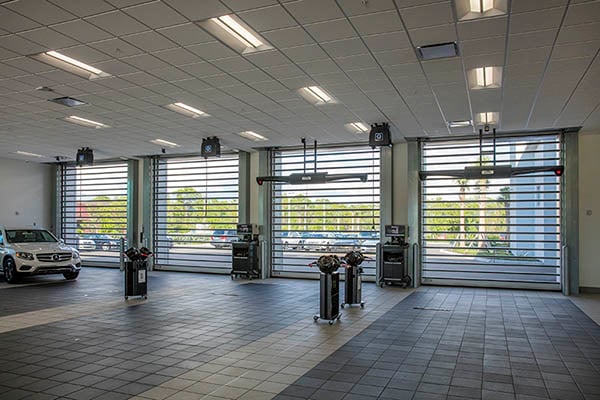
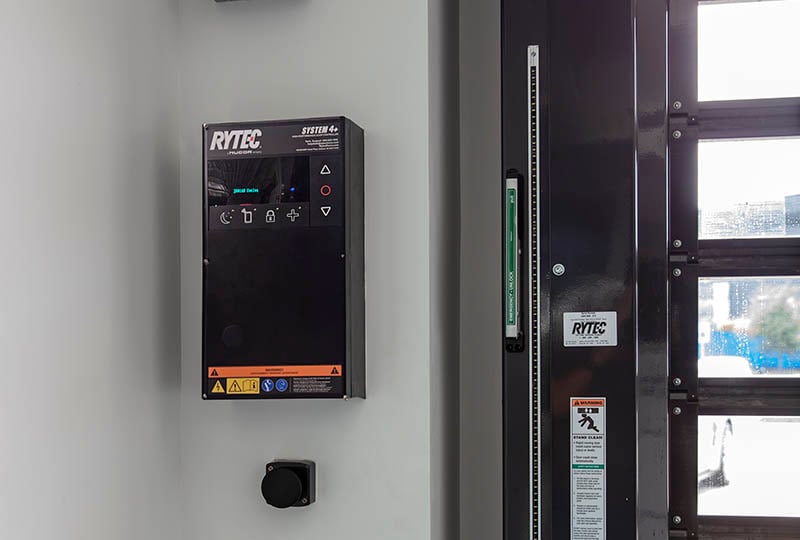
Let’s talk about how high-performance doors can help enhance your facility. Get connected with your local Rytec Regional Sales Managers.
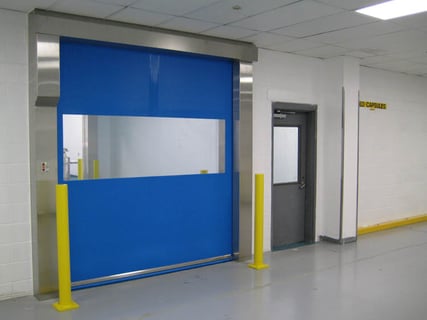
In my work with architects and design professionals, I emphasize that choosing the right clean room door for pharmaceutical, life sciences, advanced manufacturing and other highly controlled environments requires more than simply finding a door that fits the opening.
A clean room is specifically designed to prevent the introduction of dust and contaminants into the room. Due to stringent regulations, most pharmaceutical and life sciences products must be produced in clean room conditions. That makes every design element important to maintain cleanliness, prevent contamination, ensure smooth operations and meet regulatory requirements.
That’s why it is important to look closely at the features and capabilities of a high-performance clean room door before making a decision. Here are the 10 key factors to consider when selecting the right door for your application.
-
Regulatory Compliance. A high-performance clean room door must meet Current Good Manufacturing Practices (cGMP) regulations, as well as applicable USDA, FDA, NSF and ISO standards, depending on the application. Some doors are specifically engineered to meet these standards. When you’re working in a highly regulated environment, it’s important to select a door that can support your facility’s specific compliance requirements.
-
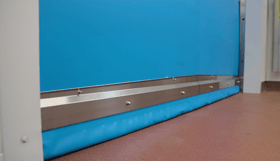 Tight Seals. When it comes to clean rooms, sealing performance matters. Clean room doors must close tightly to prevent air from leaking into or out of the space.
High-performance doors feature tight seals that minimize air exchange between clean room and non-clean room areas. They help keep contaminants out and maintain the cleanliness level, ensuring high-quality production.
Some doors feature front and rear full-height vinyl seals, vinyl loop seals on the bottom bar and full-height weatherseals for a tight seal. Optional vulcanized windows can help create a nearly airtight barrier, reducing particle infiltration. -
Pressure Differential Control. A high-performance door helps maintain proper pressurization within a clean room to prevent cross-contamination between environments and block contaminants from entering production areas from adjacent spaces. Some models can withstand the pharmaceutical industry standard 0.10" W.C. of room pressurization to help reduce air leaks, prevent unwanted air exchange, and help regulate airflow between spaces.
-
High-Speed Operation. The risk of contamination increases with each door opening, making door speed an important feature in clean rooms. With opening speeds of up to 50 inches per second, high-performance doors designed for clean rooms help minimize air incursion and contaminant ingress, while maintaining pressurization and preventing airborne particles from entering or leaving the room.
The speed of these doors also minimizes the potential for vehicle-door collisions. In the event one does occur, some doors can release from their tracks to prevent damage to the door and vehicle and prevent trapping operators and pedestrians in the doorway. Some high-performance doors can also be automatically reset and operational in minutes to minimize disruptions. -
Controlled Temperatures. Maintaining the right environmental conditions is critical in a clean room. Even small fluctuations in temperatures can cause issues for people and products. When cleaning staff or technicians shiver or sweat, they release more particles into the air, which could contaminate the environment and compromise production standards.
Clean rooms are often maintained at 69.8°F (21°C), although specific requirements vary by application. A high-performance door helps minimize temperature fluctuations, keeping employees comfortable, and maintaining product integrity. -
Proper Humidity Levels. High humidity can lead to bacterial growth, product degradation or damage, as well as corrosion. Low humidity, on the other hand, can lead to static electricity, which can interfere with the movement of particles inside the clean room. Fluctuating humidity levels can also make clean room employees uncomfortable, which could lead to costly mistakes or production delays.
Relative Humidity (RH) levels in clean rooms are commonly maintained between 30% and 60% depending on the application. A high-performance door can easily help maintain these humidity levels in your clean room. -
Easy-to-Clean Materials. Clean room doors need to withstand frequent cleaning and disinfection, and the materials need to be appropriate for the environment.
Many high-performance doors are engineered with corrosion- and chemical-resistant composite materials or stainless-steel components. These materials resist bacterial growth and allow for easy wipe-down or full washdown cleaning.
Stainless-steel components can include bottom bars, side columns, removable motor covers, fully enclosed side frames, and hood assemblies for improved contamination control. Easy-to-clean composite materials can provide corrosion and chemical resistance while offering comparable aesthetics to stainless steel.
For washdown applications, some doors include removable side columns, drip guards, and sloped gutters that help prevent liquid contaminants from dripping into the traffic pathway. These features can make complete cleaning and disinfection easier while supporting product integrity and safety. -
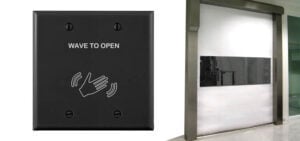 Touchless Activation. It is also important to consider how people and equipment will interact with the door. High-performance clean room doors offer a wide range of touchless activation options not typically found on traditional doors. Hands-free operation minimizes manual touch zones to help control the spread of germs and viruses, reduce the risk of chemical contamination, ensure staff safety, and improve productivity through more efficient traffic flow.
Activation options can include induction floor loop sensors that sense vehicles or equipment, motion and presence detectors that recognize movement, and wave-to-open sensors that allow workers to activate the door without touching it.
Multi-function devices can provide even greater flexibility by defining activation areas and enhancing interaction around the doorway, which can be especially useful when untrained or unfamiliar traffic is expected. -
Durable Construction. High-performance doors are specifically engineered for high-traffic, high-cycle environments to keep operations moving without extensive ongoing maintenance. They’re built to withstand millions of operating cycles with low ongoing maintenance costs.
For example, conventional doors usually run with continuous metal-to-metal contact, shortening the lifespan of parts and the door. Rytec doors are engineered specifically for a longer lifespan, with a variable-speed AC drive system for soft acceleration and deceleration to increase the life of the door’s operating components. -
Safety Systems. High-performance doors offer advanced safety features and signaling options to help protect people and equipment and decrease safety-related incidents. Systems such as the Pathwatch® Safety Light Systems, dual thru-beam photo eyes, and advanced detection and alert systems can continuously monitor the door and surrounding area for potential obstructions and help prevent collisions.
My Final Advice: Start With the Application
Every clean room is different, and there isn’t a one-size-fits-all answer when it comes to selecting a door. The key is understanding the demands of your application before determining which door is the best fit.
Ask yourself:
-
 What are you manufacturing?
-
How frequently will the door be used?
-
What environmental conditions need to be maintained?
-
What cleaning processes will the door need to withstand?
-
What regulations and standards apply to the facility?
-
How will people, equipment and materials move through the space?
Once you understand your application and demands, you can make an informed choice about the right door for your facility.
High-Performance Doors to Consider
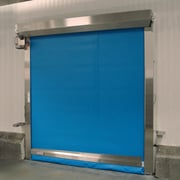
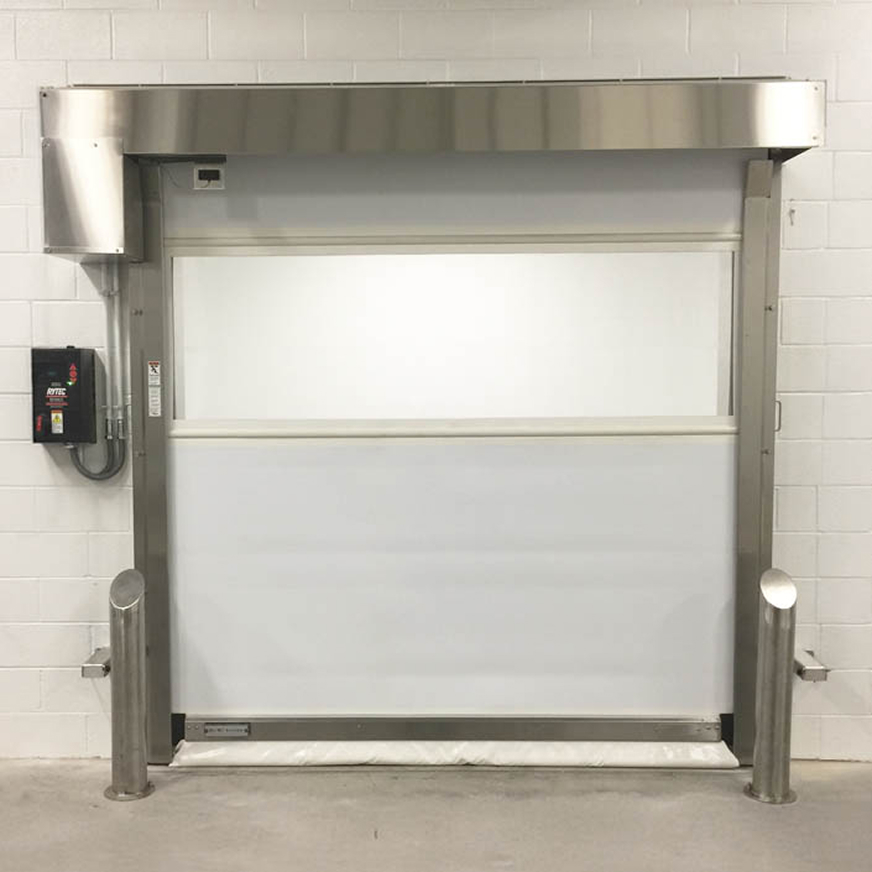
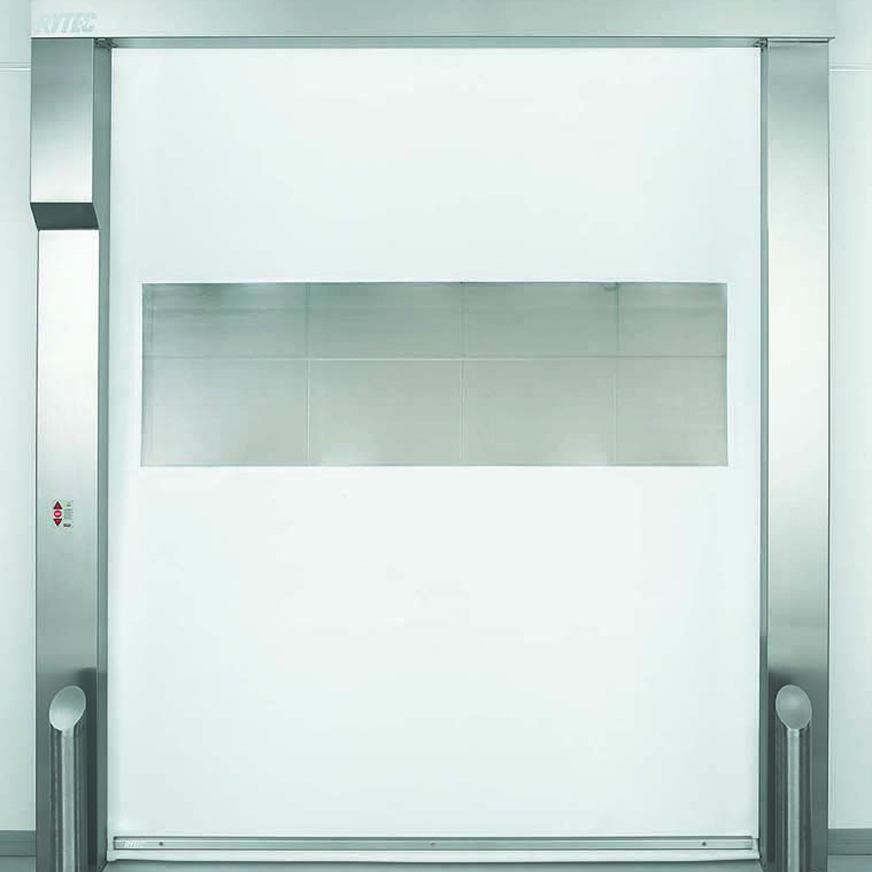
| Clean-Roll® | PredaClean® | Pharma-Seal® | Plexline® Clean |
|
|
|
|
|
The only UL-listed, high-speed door designed to meet USDA, FDA, NSF and ISO standards. |
Allows complete wipe-down of all surfaces, with full-height weatherseals and a loop seal on the bottom bar to help maintain pressure differentials. |
Features tight-seals and cGMP-compliant construction that makes it ideal for cGMP and class-rated facilities. |
Made with strong composite materials that feature a 2-ply USDA/FDA-compliant panel with USDA door components. |
Not sure which one is right for you?
Compare clean room door options here. Or contact us today to discuss your needs.
 Melissa Losiniecki
Melissa is Director, Architecture/Design/Building for Rytec Corporation. She leads Rytec’s national architectural education program, providing AIA-accredited continuing education to architects and design professionals. In addition, Losiniecki supports the evaluation and specification of high-performance doors across commercial, industrial, life sciences, cold storage, multifamily, parking and other applications.