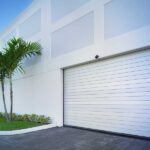

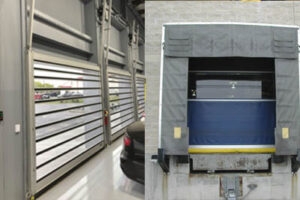
In commercial and industrial facilities, not all door openings require the same type of doors. The choice depends on many factors – including how often the door is used. One of the most important decisions facility managers and architects can make is whether to specify low-cycle doors or high-cycle doors for different areas of the building.
What is a Low-Cycle Door?
Low-cycle doors are designed for openings that aren’t frequently used, such as storage rooms, secondary access doors, or areas with sporadic traffic. These doors are engineered for reduced component stress expected with low cycles rather than rapid, repetitive cycles, to provide excellent performance and longevity. They include traditional sectional, rolling steel, sliding or bifold doors, as well as certain high-performance door models.
What is a High-Cycle Door?
A high-cycle or high-speed door is built to open and close dozens or even hundreds of times every day. These doors provide significant advantages in high-traffic environments where every second counts. Many high-performance doors fit this definition because they often operate at speeds that exceed conventional models, minimizing the time they remain open and improving productivity and energy efficiency.
Why Choosing the Right Door Matters
Choosing the wrong door for your openings can have significant effects on your entire operation.
The biggest deterrent to installing a high-cycle door in a low-usage application is usually cost, as high-performance components and advanced motors generally come with a higher upfront price tag. However, high-performance doors are built for high-volume usage – and if they’re not used often enough, several issues can occur:
- Seals can stick when the door is left closed for too long.
- Moving parts and any components that need lubrication can become dry and stop working properly.
- Sensors and safety devices (such as photo eyes, edges and detection zones) can become dirty or misaligned, causing them to malfunction.
On the other hand, installing a low-cycle door in a high-cycle application can create even more significant issues:
- Increased maintenance and repair costs occur when doors are not designed properly or when frequent use wears them out prematurely and they fail to function properly.
- Increased downtime and disrupted operations when low-cycle doors break down, delaying workflow and requiring unexpected service calls.
- Safety risks from worn-out mechanisms can lead to unsafe operation.
- Shortened door life span because parts aren’t designed for high use, and simply can’t keep up.
Knowing Which Doors to Choose
Choosing between low-cycle and high-cycle doors comes down to understanding the demands of your environment:
- High-traffic areas: High-performance, high-cycle doors deliver efficiency, reliability and long life.
- Low-traffic openings: Conventional or low-cycle doors offer cost-efficient, dependable service.
- Cost vs. long-term ROI: While high-cycle doors cost more initially, their durability, lower maintenance needs, and reduced downtime can deliver superior long-term value.
Low-Cycle Doors to Consider
There are many reasons to choose a low-cycle door – and Rytec offers doors that give you the reliability and performance you’re looking for.
Spiral® VP®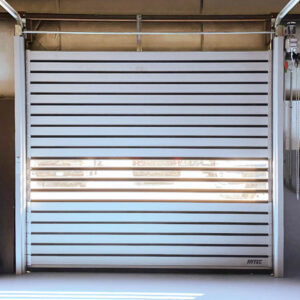 doors are great for commercial environments with light to moderate traffic – without sacrificing aesthetics, durability or reliability. They can be utilized in hospitality settings, such as in transitional indoor-outdoor areas in restaurants, as well as in low-usage areas within auto dealerships. The good news is that these low-cycle doors will match high-performance doors used in other areas of the business, such as the service center in an auto dealership.
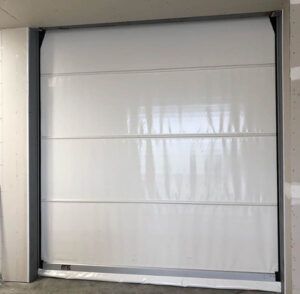 Bantam® is an economical vinyl roll-up door alternative to high-maintenance loading dock doors. They’re also useful in areas that require a two-door solution, where a security door is already in place but a fabric door is needed for visibility or ventilation when the security door is open during the day.
Whether you need a high-cycle, high-performance door or a low-cycle option, Rytec has door models for every part of your facility. Not sure which door you need? Contact us today. Our experts can help you assess your facility’s needs and traffic patterns to ensure you invest in the right door for the job.