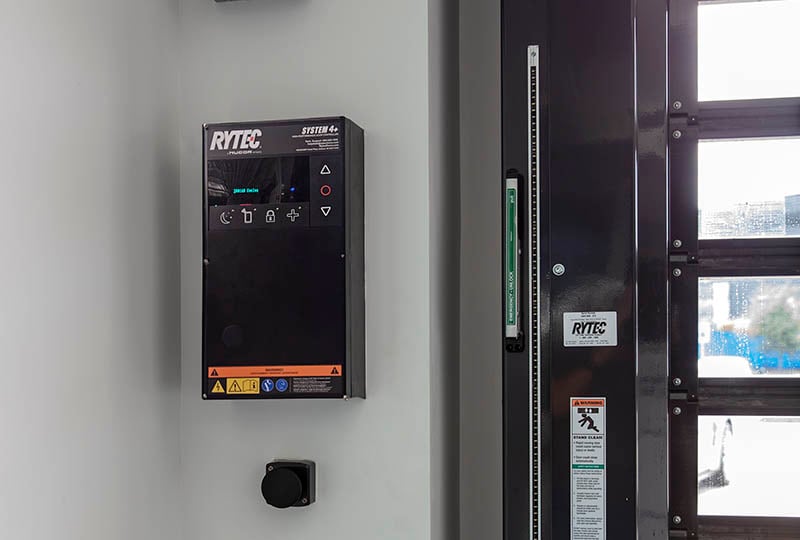
Let’s talk about how high-performance doors can help enhance your facility. Get connected with your local Rytec Regional Sales Managers.
The integrity of our global food supply hinges on a simple truth: the cold chain is only as strong as its weakest link. In a recent webinar sponsored by Rytec High Performance Doors, industry leaders Janet Roet Krais (The Sutor Company) and Shane Brennan (Global Cold Chain Alliance) shared a critical insight: modern food safety failures are rarely the result of a single catastrophic event. Instead, they are the product of small, compounding breakdowns at transfer points.
As an authority in high-performance door solutions, Rytec understands that these “handoffs”—the moments product moves from the facility to the dock and onto the trailer—are where safety is most at risk.
The Manufacturer’s Perspective: Precision and Culture
For manufacturers like The Sutor Company, managing $40 million of refrigerated product annually requires more than just cooling; it requires a culture of precision. Janet Roet Krais emphasized that while a facility’s “four walls” are controllable, the transition to third-party logistics (3PL) introduces variables like “less-than-load” (LTL) consolidation and varying dock temperatures.
To combat this, successful processors are adopting “conservative shipping targets.” While the federal safety limit is 40°F, industry leaders often internalize much lower targets to create a safety buffer. Furthermore, the human element cannot be ignored. A robust food safety culture empowers every employee to speak up the moment they spot a deviation, preventing minor temperature “blips” from escalating into costly recalls.
The Regulatory Horizon: From Reaction to Prevention
The regulatory landscape is shifting from inspection-based regimes to preventative surveillance. Shane Brennan highlighted that while the U.S. has seen a 98% reduction in foodborne illness mortality over the last century, new challenges like FSMA 204 are raising the bar.
Though the compliance deadline for FSMA 204 has been extended to July 2028, the mandate is clear: every link in the supply chain must be able to provide traceability data within 24 hours. This “tech-enabled” traceability isn’t just a hurdle; it’s an opportunity for operational excellence. By embracing real-time GPS monitoring and geofencing, companies can ensure transparency from farm to fork.
Innovation in the Cold Chain
Sustainability is also entering the safety conversation. Emerging research suggests that the frozen food chain may be “over-chilling” products. By optimizing temperatures by just a few degrees—without compromising safety—the industry could reduce energy consumption by up to 10%.
At Rytec, we believe that protecting the cold chain requires the right infrastructure at every opening. Whether it’s maintaining strict thermal boundaries at the loading dock or ensuring rapid cycle times to minimize air exchange, high-performance doors are a primary defense against the “compounding breakdowns” that threaten food safety.
By focusing on collaboration, advanced technology, and a proactive safety culture, we can ensure that the journey from our doors to the consumer’s table remains unbroken.
If you did not attend, you may access the recording here.
Optimize Your Environmental Control
Don’t let your doorways become a liability in your cold chain. Explore Rytec’s specialized high-performance door solutions designed to maintain strict temperature standards, maximize energy efficiency, and protect your inventory.
Food Safety & Choosing the Right Door
Visit our Cold Storage Resource Center to learn more about our industry-leading solutions for refrigerated and frozen facilities.